
- Name
- Adesanya Babatunde AbdulAzeez
- @tundeyinde
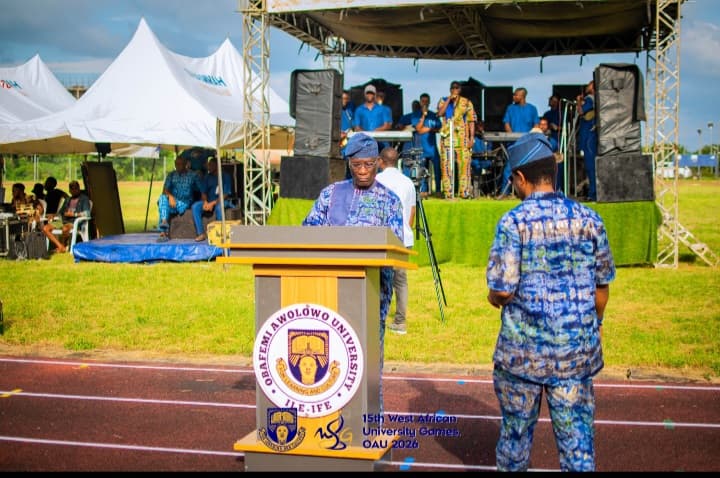
WAUG 2026 Kicks Off at OAU Amid Big Ambitions, Logistical Hiccups, and Athlete Discontent
Ile-Ife, 5th October 2026
The 2026 West African University Games (WAUG) officially got under way at Obafemi Awolowo University (OAU) on Monday. While regional sports organisers announced the event as a grand revival, opening day was met with a mix of scheduling delays, accreditation pending and a major student welfare protest that created tension and disrupted the peace on campus.
The President of the West Africa University Sports Federation (WAUSF), Mr. Ibrahim Shaibu Tanko, described the tournament as an important opportunity for student-athletes to gain international experience and exposure. He said the games mark the return of a competition that had been inactive for almost eight years, with major improvements made to its structure and facilities to bring it up to regional standards. On the issue of regional unity, Mr. Tanko said the federation had been working closely with key stakeholders across West Africa, including Dr. Mustapha, an executive with the Economic Community of West African States (ECOWAS), to ensure a smooth and enjoyable tournament for all participating universities.
However, he also pointed out a major challenge: no universities from French speaking West African countries took part in this edition of the competition. He encouraged the student athletes to represent their institutions well, follow the tournament rules, and take the opportunity to meet and connect with students from other countries. He said these relationships could help strengthen unity and friendship across the region.
On the administrative front, the Chairman of the Local Organising Committee (LOC) and OAU Deputy Vice-Chancellor, Prof. Emmanuel Akinfala, credited the progress of preparations to robust teamwork and a shared sense of purpose. Acknowledging that initial logistical challenges had arisen, Prof. Akinfala assured reporters that they were now under control. He expressed appreciation to OAU Vice-Chancellor Prof. Simeon Bamire for his visionary leadership and support, noting that the committee had reached out to corporate sponsors and alumni, with several already responding. According to him, committee members remained entirely "on the same page and frequency."
Later in the day, the WAUG executive board held an internal meeting with OAU management, led by the Vice-Chancellor and Deputy Vice-Chancellor, at the Senate building. Furthermore, the WAUG Secretary General addressed pressmen at the Sports Complex, announcing that accreditation exercises remain ongoing for some universities, with a final cleared list to be officially communicated on Tuesday. He urged all delegations to remain calm and await formal updates from the Secretariat.
The competitions got off to different starts, with some events experiencing delays while others moved ahead as planned.
Table Tennis: The competition was delayed due to an ongoing campus protest and the late arrival of the official entries from the Secretariat. Seven schools are taking part: Federal University of Technology Akure, Federal University of Agriculture and Technology Okeho, University of Abuja, University of Ilesha, OAU, Lagos State University (LASU), and Benson Idahosa University (BIU). Together, they have 14 male and 9 female players registered. However, the official tournament schedule and match draws were still being prepared at the time of reporting.
Taekwondo: The event had a smoother start. University of Ilesha student athlete Opesanmi Sara confirmed that the official weigh in was completed successfully, allowing the matches to proceed as scheduled later in the day.
Beneath the Glitz: OAU Athletes Raise Welfare Concerns
While attention has largely been focused on the games, some home athletes from Obafemi Awolowo University have also been raising concerns about their welfare. Reports by ACJOAU said the athletes began a boycott to draw attention to what they described as long standing issues affecting sports at the university.
According to the protesting athletes, they receive a camping allowance of ₦28,000, which they said is much lower than the amounts provided by some other institutions. They cited Afe Babalola University, with ₦400,000, and the University of Ilesa, with ₦150,000.
The athletes also raised concerns about their living conditions in the male hostels. They reported problems including bedbug infestations, poor water supply, and damaged toilets and bathrooms.
OAU student athlete Jide Mayowa also said athletes have often struggled to get basic sporting kits and equipment, adding that they sometimes have to submit repeated petitions and make personal appeals before receiving what they need.
Another student athlete, Ayandele Bayo, said:
“We have come to the understanding that the school thinks they are doing us a favour when we go out to represent them, which is not supposed to be.”
The athletes said many of their concerns had been raised since the previous Nigerian University Games in Jos but remained unresolved. For them, the current boycott represents the latest stage of frustrations that have built up over time.
Student athlete Bolu Kosoko captured the mood among the protesters, saying:
“Sports is now a struggle in OAU, not just a lyric in the school anthem.”
The athletes also alleged that some students taking part in the boycott had faced threats of academic consequences, including portal restrictions, carryovers and delays to graduation. These claims had not received a public response from the university management at the time of reporting.
As WAUG 2026 continues, attention will not only be on the performances and organisation of the games but also on how the concerns raised by OAU athletes are addressed.
AlliSports newsletter
Sharp reporting, match updates, interviews and original analysis from Nigerian and African sport.
No spam. Unsubscribe anytime. Read our privacy policy.
Comments are provided by Disqus and require optional cookies.